
-
USA - English
- Locations
- SDS Access
- CTVista®+ Login

A beverage production facility was required to monitor disinfectant residuals in their bottle coolers. Tracking chlorine residuals is an important component of monitoring microbiological growth in these dynamic systems. Inconsistent data can lead to high or low chlorine residuals, potentially causing issues such as surface degradation, discoloration, odor/taste transfer, and reduced mechanical strength of the bottles being cleaned.
The legacy chlorine analyzer at the site required frequent manual cleanings to maintain accuracy and could not be connected to the facility’s control system, which meant operators had to perform manual chlorine residual tests every four hours to verify readings. This labor-intensive approach led to inconsistent chlorine data, increased maintenance demands, and added operational strain.
Looking for a better overall chemical and monitoring program, the facility reached out to ChemTreat for help.
The local ChemTreat team provided a comprehensive turn-key chlorine chemical and analyzer program. To meet the requirement for continuous oversight of the bottle coolers, the analyzer’s controller was connected to ChemTreat’s CTVista®+ intelligent water management platform. This software offers rapid monitoring, data trending, and alarm capabilities, and the integration enabled plant personnel to respond quickly to off-spec chlorine residuals, helping improve process oversight and system reliability.
ChemTreat’s Technical Staff team assisted with the installation process and provided training to plant operators.
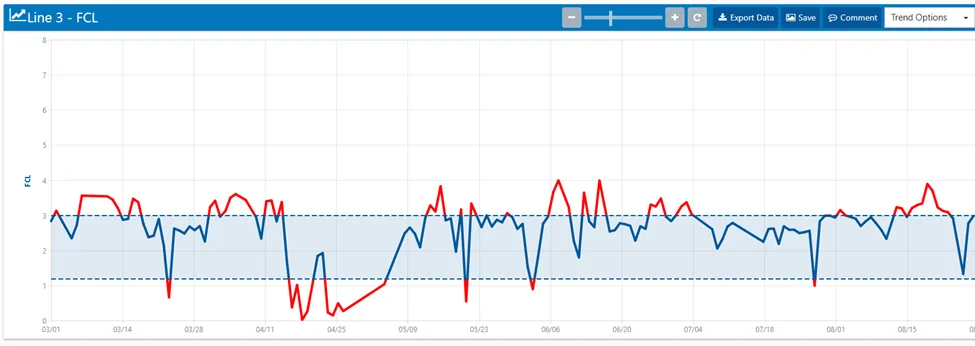
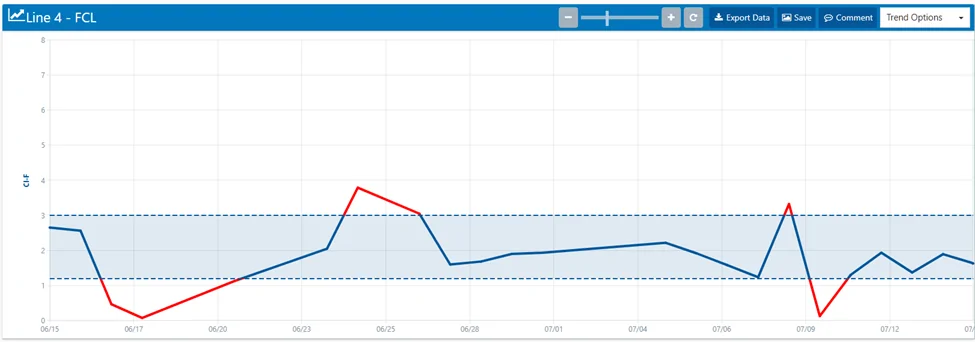
Graphs showing chlorine residuals on two bottle cooler lines. Thanks to the new analyzer, operators can now track when residuals are out of spec.
After upgrading their chlorine analyzer setup, the facility saw the following improvements:
Operators and quality assurance teams have expressed strong confidence in the upgraded monitoring setup and are able to meet all required plant specifications.
Download the Case StudyResults are examples only. They are not guaranteed. Actual results may vary.