
-
USA - English
- Locations
- SDS Access
- CTVista®+ Login

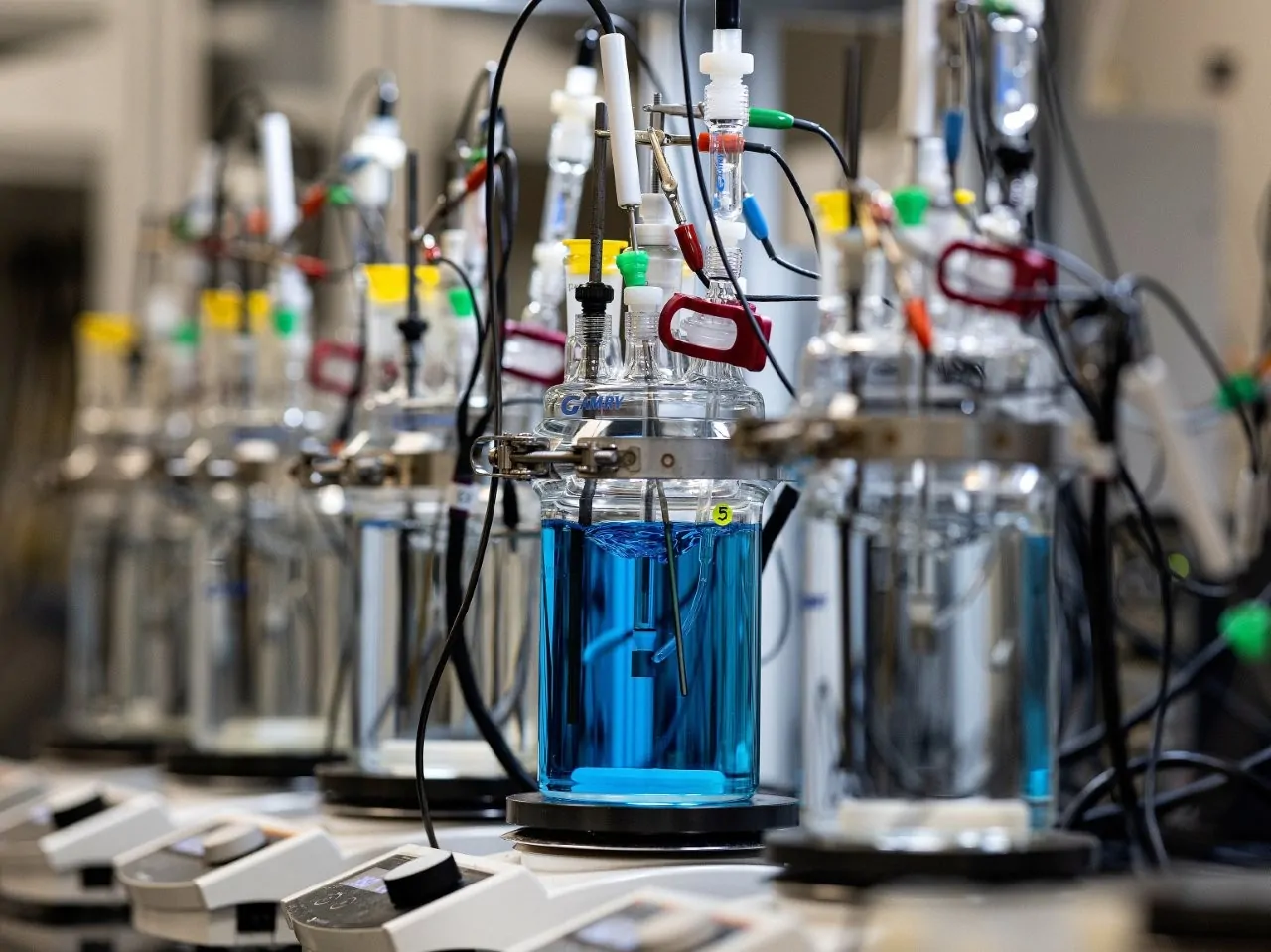 Source water sampling is vital to the design phase of industrial plants. Samples are ideally collected over a period of several months or longer to capture seasonal chemistry variations. This is particularly important when surface water is the makeup source. The data provides critical information that plant personnel and the water treatment chemical supplier use to develop the most effective treatment programs for the various plant systems. Additionally, this data is crucial for selecting makeup treatment equipment and determining the appropriate materials for heat exchangers and other water system components. Design engineers often select materials without considering water chemistry, only to learn later that some of the selected metals are ill-suited. For existing facilities, periodic makeup, cooling, and wastewater analyses are necessary to evaluate process conditions and discover if treatment programs are effective or in need of modifications.
This chapter highlights laboratory capabilities and provides examples of how data is utilized to solve customer issues at ChemTreat’s state-of-the-art Technology and Innovation Center; however, water is not the only constituent of importance. Addressing scaling or microbiological fouling issues requires performing deposit analyses, while metallurgical analyses are often needed for corrosion investigations, as will be explored in this chapter. When troubleshooting water system issues, it is also critical to consider operational parameters, equipment manuals, and manufacturer’s guidelines.

Figure 9.1 ChemTreat Technology and Innovation Center
Interpreting a Water Analysis
The document below demonstrates the analyses ChemTreat lab personnel perform on a standard sample, and it features water chemistry data from an industrial facility. Additional analyses are available upon client request or as necessitated by specific circumstances.

Figure 9.2. An analysis of makeup and cooling water chemistry at an industrial plant.
The first item to note is that this plant has two possible makeup sources, groundwater and municipal wastewater treatment plant effluent (designated in this report as WTP). WTP is the primary source at this facility. The WTP sample contains a high concentration of dissolved solids, which can affect makeup pre-treatment equipment selection and influence the potential for corrosion, scaling, and microbiological fouling in the cooling systems. One may ask, “Why would the plant accept WTP effluent as raw makeup instead of well water?” There are a few potential possibilities.
Now we will examine other constituents in the WTP stream that have significant impact on plant operations or on treatment programs and materials selection. It is important to note that Figure 9.2 is only a snapshot analysis. Conditions can fluctuate significantly within short periods of time or seasonally.
We will examine other constituents of a water sample that are significant in many plant operations, but it is first necessary to discuss the fundamental concept of balancing the major cations and anions.
When first evaluating a water report, it is essential to balance the major cations and anions. This allows you to initially confirm the laboratory report’s reliability. For example, the primary chemistry data from a snapshot analysis of a Midwestern lake that supplies a 1,500 MW power plant is included below.
Table 9-1. Analysis of a Midwestern Lake Water Sample
| Parameter | mg/L as Ion | mg/L as CaCO3 |
|
Calcium (Ca2+) |
46.4 |
116* |
|
Magnesium (Mg2+) |
9.2 |
37.7* |
|
Potassium (K+) |
5.1* |
6.5 |
|
Sodium (Na+) |
14.9* |
32.5 |
| Major Cations Subtotal | 192.7 | |
| M-Alkalinity (HCO3–) | 144 | 117* |
| Chloride (Cl–) | 14.4* | 20.3 |
| Nitrate (NO3–) | 1.0* | 0.8 |
| Sulfate (SO42-) | 49.0* | 51.0 |
| Major Anions Subtotal | 189.1 |
* Indicates the units in which the constituent was reported.
Calcium carbonate equivalents involve a crucial accounting method used in raw water analysis. Consider the nature of the aqueous ions. Potassium and sodium are monovalent (+1 charge), while calcium and magnesium are divalent (+2). Likewise, bicarbonate alkalinity, chloride, and nitrate are monovalent, while sulfate is divalent. Thus, sodium will associate with one chloride, but calcium will associate with two. Similarly, two sodium ions will associate with sulfate, while only one calcium ion does. These valence variations, coupled with the different molecular weights of the ions, signify that an analysis with the constituents reported “as ion” or “as species” will not indicate whether the ions are in balance. Various techniques can be used to balance the constituents, such as converting ions to moles per liter or, more frequently in the water industry, to equivalents per liter. The most common method, however, is to convert the ions to their calcium carbonate equivalent. With a molecular weight close to 100, the calculation is simplified. The following table outlines the conversion factors for the ions shown above.
Table 9-2. Ion to CaCO3 Conversion Factors
|
Ion |
Conversion Factor to CaCO3 Equivalent |
|
Calcium |
2.50 |
|
Magnesium |
4.12 |
|
Potassium |
1.28 |
|
Sodium |
2.18 |
|
‘M’ alkalinity |
0.81 |
|
Chloride |
1.41 |
|
Nitrate |
0.81 |
|
Sulfate |
1.04 |
Many labs, including ChemTreat’s, report hardness ions and alkalinity as CaCO3, while other ions are recorded as species. Common guidelines suggest that the sums of the major cations and the major anions (as CaCO3) should balance within 10 percent to indicate acceptable lab accuracy. The two subtotals in Table 9-1 are within 1.9 percent, which is well within this threshold. Silica, as it is only weakly ionized in water, is not included in the balancing calculations.
The preceding sections highlighted important analyses for cooling water and makeup water systems. The following section will address additional applications.
At many industrial facilities, a percentage (often large) of the steam utilized for process heating is recovered as condensate and returned to the boilers. Depending on the plant unit operations, or those facilities to which steam might be exported, condensate return may contain a wide variety of impurities ranging from corrosion products to chemicals leaking in at heat exchangers. Space limitations prevent a review of the many contaminants that could be present, but at refineries, petrochemical plants, and similar facilities, TOC is a critical measurement. Reliable on-line TOC analyzers are now available and can provide immediate notification of upset conditions.
Iron is another critical parameter to monitor in condensate samples, primarily because most of the condensate system is fabricated with carbon steel components. It is essential to measure total iron, because under the operating conditions of a well-functioning condensate system, most iron in the sample will be insoluble and require acid digestion for measurement.
Trace metal analyses can be particularly important for monitoring plant discharge streams, including those into and out of the facility’s wastewater treatment plant. The following table outlines harmful metals and metalloids that may appear in industrial wastewater for which regular analyses may be required.
Table 9-3. Toxic Trace Elements That May Be in Industrial Wastewaters
Table Adapted from Reference 1
|
Element |
Sources |
|
Arsenic |
Mining wastewater, pesticides, chemical wastes |
|
Beryllium |
Coal leachate, industrial processes |
|
Cadmium |
Mining and metal industry wastewaters |
|
Chromium (hexavalent species) |
Metal plating |
|
Copper |
Metal plating, mining wastewater, heat exchanger corrosion |
|
Lead |
Industrial and mining wastewaters |
|
Mercury |
Industrial, coal, and mining wastewaters |
|
Selenium |
Coal combustion wastewaters |
|
Silver |
Electroplating processes |
|
Zinc |
Industrial and cooling tower wastewaters, metal plating |
For these analyses, ChemTreat personnel utilize a variety of modern analytical equipment, including gas, ion, and liquid chromatography, inductively coupled plasma (ICP), ICP coupled with mass spectrometry, and TOC instrumentation.
Analyses of solids deposits and density are valuable in determining the factors behind scale formation or other deposition. The figure below shows a typical qualitative analysis of a boiler tube deposit.

Figure 9.3. Deposit analysis from the mud drum of an industrial steam generator.
This report illustrates a common problem in steam generators, buildup of iron oxides on boiler tubes and internals. The iron oxides are often corrosion products generated in condensate return or feedwater systems. When the particulates reach the boiler, the high temperatures induce deposition. Heavy deposits restrict heat transfer and can cause tube overheating. More critical is the potential for under-deposit corrosion by either acidic or alkaline species. The data shown in Figure 9.3 suggests that investigation is needed into sources of carbon steel corrosion within the steam generating network. Water sample iron analyses would assist in the investigation, potentially through grab-sampling methods and on-line techniques like nephelometry.
Presence of other constituents in a deposit analysis suggest additional issues. For example:
Analytical techniques for deposit chemistry include:

Figure 9.4. A scanning electron microscope in use at ChemTreat’s analytical lab.

Metallurgical analyses are often critical for evaluating failure mechanisms, and ChemTreat works closely with metallurgical experts to precisely determine the causes of corrosion and failures. A common corrosion example is shown in Figure 9.5 below, where an analysis revealed under-deposit acid corrosion of rifled boiler tubes caused by ingress of chloride from condenser tube leaks.

Figure 9.5. Under-deposit acid corrosion of a rifled boiler tube.
Other instances where metallurgical analyses provide crucial insights include, but are not limited to:
Metallurgical analyses are often a guide for evaluation of chemistry treatment programs. For many years, coordinated and congruent phosphate chemistry were the recommended practices for high-pressure boilers. Researchers later found that this chemistry caused acid-phosphate corrosion in many units. Today, alternative phosphate programs are the standard.
In some cases, following failures, metallurgical examination has revealed that the tube or piping material is not what was specified in the original design. For example, the substitution of 304 SS for more robust materials in cooling water applications.
Corrosion coupons are discussed in detail in Chapter 7. After field evaluation of extracted coupons, they require further lab analysis. It is very important, for example, to differentiate general corrosion from pitting.

Figure 9.6. A corrosion coupon that clearly illustrates pitting.
Figure 9.6 illustrates the benefit of having pictures of the coupon included before and after cleaning in the report. The images provide insights into the type of corrosion present, assisting in the recommendation of methods to mitigate corrosion in the system.
Similarly, analysis of scale on deposit coupons can reveal issues related to deposit-control chemistry.
Chapter 7 discusses microbiological fouling of cooling waters and the tests that can identify the organisms responsible. If biofouling is observed during equipment inspection, inspectors should have the appropriate tools ready, including a small spatula, sample collection bottles or bags, and writing tools to document the sample time, date, and location, for further lab analysis. The analyses will provide valuable information about the microbes that have flourished in the system and offer guidance for future control.

Figure 9.7. A microbiological analysis.
The microorganism species and the number of colony-forming units (cfu) are examples of the important criteria included in this report. This data enables the evaluation of the biocide program’s performance and potential modifications, and it highlights areas where treatment may be lacking, even if the rest of the system is in good condition.
Earlier chapters outlined the importance of on-line instrumentation for continuous monitoring of makeup, process, and cooling water chemistry. However, laboratory analyses are still vital for evaluating system conditions and revealing pathways for the selection or enhancement of chemical treatment programs. For new projects, pre-design raw water analyses are important for materials selection and preparation of chemical treatment programs. Always remember to consult with a team of experts when developing a treatment program.

Director, Analytical Lab
As the Director of ChemTreat’s Analytical Laboratory, Joel Phillips oversees a diverse team of scientists and researchers. Joel earned his B.S. in Chemistry from Virginia Tech, followed by a post-bac degree in Computer Science and an M.B.A. from Virginia Commonwealth University. Joel was instrumental in the construction and development of ChemTreat’s new, state-of-the-art Innovation Center in Ashland, Virginia, where new technologies and solutions are developed by ChemTreat’s experts.

Senior Technical Support Consultant
Mark McIntyre has a B.S. in Mechanical Engineering Technology from LeTourneau University in Longview, Texas. He has worked in industrial water treatment since 1988 focusing primarily on heavy industry accounts. As part of ChemTreat’s internal consulting group, Mark provides technical oversight to our heavy industry customers, focusing primarily on boiler and cooling applications.
The ChemTreat Water Essentials Handbook would not have been possible without the contributions of many people. See the full list of contributors.